


Imagine a future where manufacturing is as simple as hitting “print”. Enter stainless steel 3D printing, a game-changer that’s transforming industries one layer at a time. No more laborious machining or waiting weeks for parts: with this technology, we can create complex, durable metal structures faster than you can say “what’s my password?” Immerse as we explore the intriguing realm of stainless steel 3D printing. It might just be the most exciting thing to happen to manufacturing since sliced bread, or at least since someone figured out how to slice bread efficiently.
What Is Stainless Steel 3D Printing?
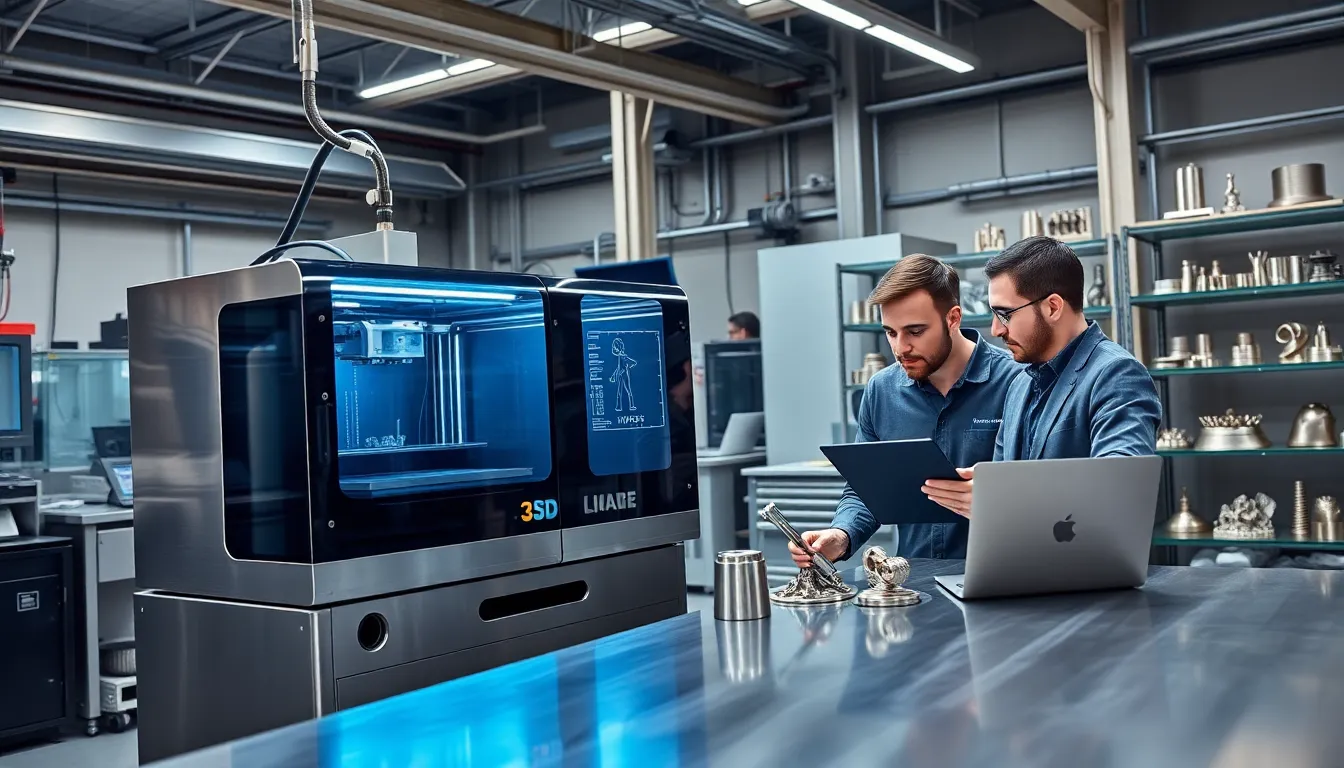
Stainless steel 3D printing refers to the process of creating three-dimensional objects from digital models using stainless steel as the primary material. This technology employs several methods to produce dense metal parts with remarkable precision and complexity. The process typically involves techniques such as powder bed fusion, where fine stainless steel powder is selectively melted and fused together using a laser or electron beam. Each layer is carefully constructed, allowing for intricate designs that traditional methods might find challenging. In simpler terms, it’s like building a Lego tower but with metal, one delicate piece at a time.
Stainless steel is favored in 3D printing due to its excellent mechanical properties, resistance to corrosion, and aesthetic appeal. As a result, it serves various industries including aerospace, automotive, and medical sectors, leading to innovative applications that enhance efficiency and performance.
Benefits of Stainless Steel in 3D Printing
Opting for stainless steel in 3D printing presents a range of significant advantages.
Durability and Strength
Stainless steel parts can withstand substantial mechanical stress, making them ideal for demanding applications. Components produced are not just durable but also exhibit exceptional strength-to-weight ratios.
Corrosion Resistance
With its inherent resistance to rust and degradation, stainless steel remains reliable even in harsh environments. This durability extends the lifespan of printed parts, reducing the need for replacements and maintenance.
Versatility in Design
The design freedom offered by 3D printing allows for intricate geometries that enhance functionality. Whether it’s for complex internal structures or lightweight designs, stainless steel ensures these creations can be realized.
Cost Efficiency
In the long run, 3D printing with stainless steel can reduce costs by minimizing material waste and streamlining production processes. Specialized parts that may take weeks to manufacture traditionally can be printed in hours, leading to faster time-to-market.
Key Technologies Used in Stainless Steel 3D Printing
Understanding the technologies behind stainless steel 3D printing reveals how this process achieves remarkable results. The most prominent techniques include:
Selective Laser Melting (SLM)
One of the leading methods, SLM uses powerful lasers to melt stainless steel powder layer by layer. This process allows for complete melting of the powder, resulting in high-density, durable parts. Its precision makes it suitable for even the most complex designs.
Electron Beam Melting (EBM)
Similar to SLM, EBM utilizes an electron beam instead of a laser. This technology operates in a vacuum environment, which not only aids in creating denser parts but also accelerates the build process. It’s particularly beneficial for larger components.
Binder Jetting
In this method, a liquid binder is used to bond stainless steel powder particles into a solid object. Once printed, the part undergoes a sintering process to achieve its final density. Binder jetting is often more cost-effective than other methods, though it may not offer the same mechanical properties.
Applications of Stainless Steel 3D Printing
The applications of stainless steel 3D printing are broad and impactful across various industries:
Aerospace
In the aerospace sector, components made from stainless steel are crucial for weight reduction and fuel efficiency. Parts like brackets, housings, and engine components can exhibit complicated geometries, enhancing performance.
Medical
Medical devices and surgical instruments benefit greatly from stainless steel 3D printing. Custom prosthetics, implants, and tools can be created faster, enabling personalized treatments that cater to specific patient needs.
Automotive
In the automotive industry, stainless steel parts help in reducing weight while maintaining performance. This manufacturing method allows for rapid prototyping and the creation of complex parts that improve vehicle design.
Industrial Equipment
Stainless steel is commonly used in manufacturing industrial equipment designed to withstand high stress and corrosive environments. 3D printing these components reduces downtime and enhances productivity.
Challenges and Limitations
While stainless steel 3D printing comes with numerous benefits, it’s essential to acknowledge the challenges it presents:
Material Limitations
Not all stainless steel alloys are suitable for 3D printing. The specific properties of alloys must be considered to ensure successful fabrication. Some may not perform as well under stress or in corrosion-resistant contexts.
Surface Finish
Parts produced through 3D printing may require post-processing to achieve the desired surface finish. This additional step can add to production time and costs, particularly in applications where aesthetic quality is paramount.
Initial Investment
The cost of acquiring the necessary equipment for stainless steel 3D printing can be significant. Smaller companies may find it challenging to justify the initial investment, even though potential long-term savings.
Future Trends in Stainless Steel 3D Printing
The future of stainless steel 3D printing is promising, with several trends shaping its evolution:
Advancements in Technology
As technology evolves, improvements in printing speed and accuracy will likely emerge. Enhanced scanning and real-time monitoring technologies can minimize errors and enhance the performance of printed parts.
Sustainability Efforts
With a growing emphasis on sustainability, the recycling of metal powders and energy-efficient processes are gaining traction. Companies will likely adopt greener practices in the production phase to reduce their environmental impact.
Expansion of Applications
New applications for stainless steel 3D printing are emerging continually. Innovations in sectors such as energy and marine are being explored, providing opportunities for even broader usage of this technology.


