


Imagine a world where your dentist can create custom dental implants while you binge-watch your favorite show in the waiting room. Sounds magical, right? Welcome to the era of 3D printing in dentistry. From crafting intricate dental models to producing crowns in record time, this technology is not just a trend: it’s a complete game changer. In this text, we’ll explore how 3D printing is transforming dental practices and what it means for patients and professionals alike.
The Evolution Of 3D Printing Technology
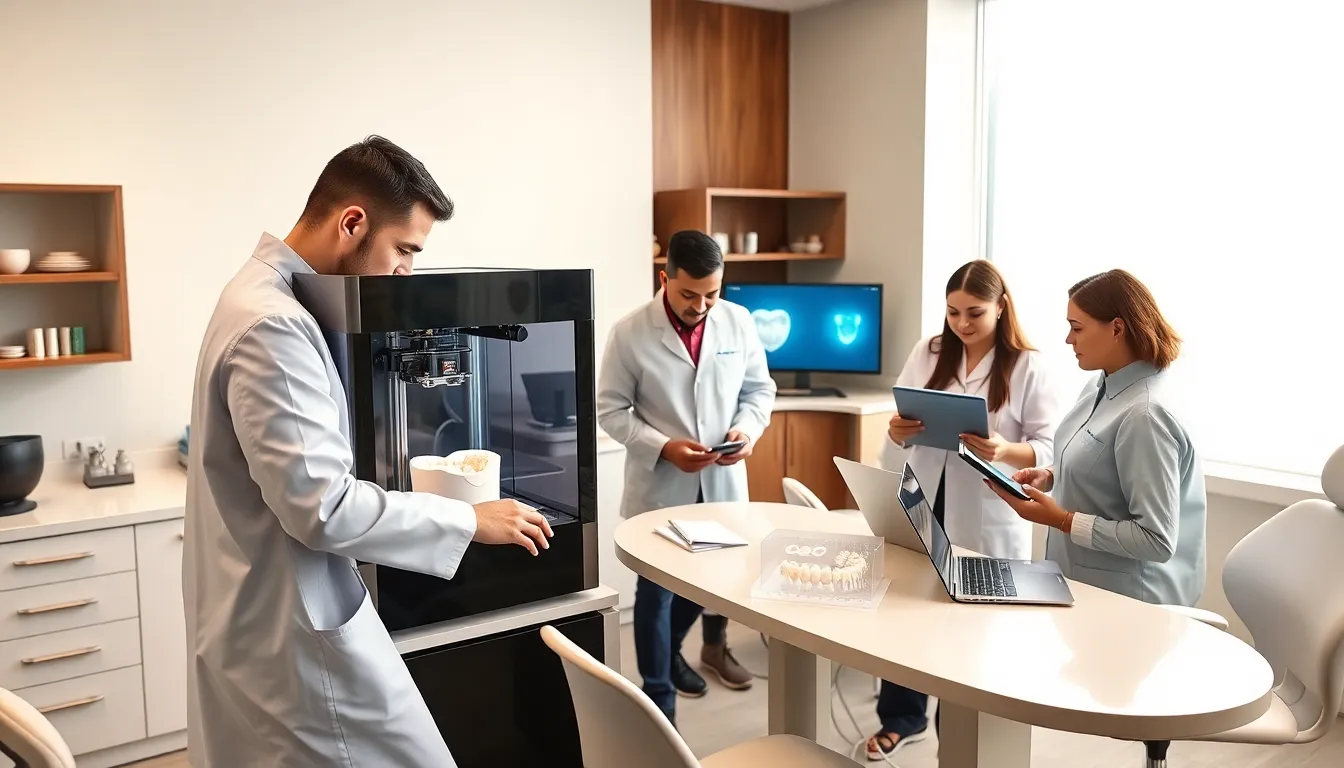
The story of 3D printing begins in the early 1980s with the invention of stereolithography by Chuck Hull, who dreamed of creating three-dimensional objects layer by layer. Fast forward to today, and that dream has become a reality. The dental field quickly recognized the potential of this technology, embracing it to improve efficiency, accuracy, and patient outcomes.
Initially, traditional methods of creating dental models involved cumbersome, time-consuming processes. The advent of 3D printing has drastically changed this landscape. In just a matter of hours, dentists can produce highly detailed models, custom-fit prosthetics, and even surgical guides with remarkable precision. This leap from manual techniques to automated processes has sparked an evolution in how dental care is delivered.
Impact On Dental Practices
3D printing has significantly influenced how dental practices operate. For starters, it allows for rapid prototyping and production. Gone are the days of waiting weeks for dental appliances to be created externally. Now, practices equipped with 3D printers can design and print crowns, bridges, and other dental devices on-site, greatly reducing turnaround times.
Benefits Of 3D Printing In Dentistry
The benefits of integrating 3D printing into dental practices are numerous. Firstly, accuracy is substantially enhanced. Customization is no longer a luxury but a standard. Tailored devices fit better, so improving comfort and effectiveness.
Also, the cost savings aren’t to be overlooked. By embracing in-house production, dental practices can reduce outsourcing expenses and offer more competitive pricing to patients. This results in increased patient satisfaction and retention, fostering a thriving practice.
Also, digital workflows streamline communication between patients and dental staff. Instead of traditional impressions, which can be uncomfortable and imprecise, dentists now often use intraoral scanners, sending data directly to the printer. This simplicity not only saves time but also elevates the patient experience.
Applications Of 3D Printing In Dentistry
3D printing’s applications in dentistry are extensive, touching nearly every aspect of dental care, from conventional treatments to advanced surgical procedures. The technology is a powerful tool for producing dental models, surgical templates, orthodontic aligners, and even implants.
Challenges And Limitations
But, even though the numerous advantages, challenges do persist. Regulatory hurdles pose a significant obstacle. The FDA currently oversees the regulation of dental devices, and ensuring compliance with safety and efficacy standards can prove to be a lengthy process. Dentists and manufacturers must ensure they meet strict guidelines before introducing new 3D printed solutions to the market.
Another limitation is the initial investment in 3D printing technology itself. Though prices have decreased over the years, acquiring high-quality printers and materials may still be a barrier for smaller practices looking to enter the 3D printing space.
Future Trends In Dental 3D Printing
As technology continues to advance, the future of 3D printing in dentistry looks exceptionally promising. Innovations in materials are one area ripe for exploration. Biocompatible materials are being developed that can be safely used in and around the oral cavity, further expanding the applications of 3D printing.
Also, the integration of machine learning and artificial intelligence could significantly enhance design and production processes. Imagine printers that can learn from past projects to create better, faster, and more precise dental solutions. The potential for customization could soar to previously unimaginable heights.
Also, we might see a rise in the accessibility of 3D printing technology. As more practices adopt these systems, centralized production facilities might emerge that would allow smaller clinics to access high-quality 3D printing services without the overhead costs associated with purchasing their equipment.


